Graph Coloring
The Graph Coloring problem involves assigning a color to each vertex of a graph such that no two adjacent vertices share the same color. The goal is to find a valid coloring that uses as few colors as possible. The minimum number of colors is known as the chromatic number of the graph.
Find an assignment of colors to the vertices of a given graph such that no two vertices connected by an edge have the same color.
Input
The input consists of the graph. The graph is represented as a list of edges. An edge is represented as a tuple of 2 integers: v u, where v and u are the vertices making the edge.
Vertex IDs are a consecutive range starting from 0, i.e., 0, 1, 2, ..., N - 1, where N is an arbitrary number of vertices. No edge connects a vertex to itself. Any pair of vertices has zero or one edge. The graph is connected, i.e., any vertex is reachable from any other.
Output
The output is a whitespace separated list of integers denoting the color assigned to each vertex, ordered by vertex ID starting from 0. The colors should be represented by non-negative integers, starting from 0.
Validation and Scoring
The output must:
- be a list of
Vintegers, whereVis the number of vertices. - contain only non-negative integers representing colors.
- satisfy the constraint that for every edge
(u, v)in the input graph, the color assigned to vertexumust be different from the color assigned to vertexv.
The score is the number of colors used. The objective is to minimize the score.
Example
Consider the following graph:
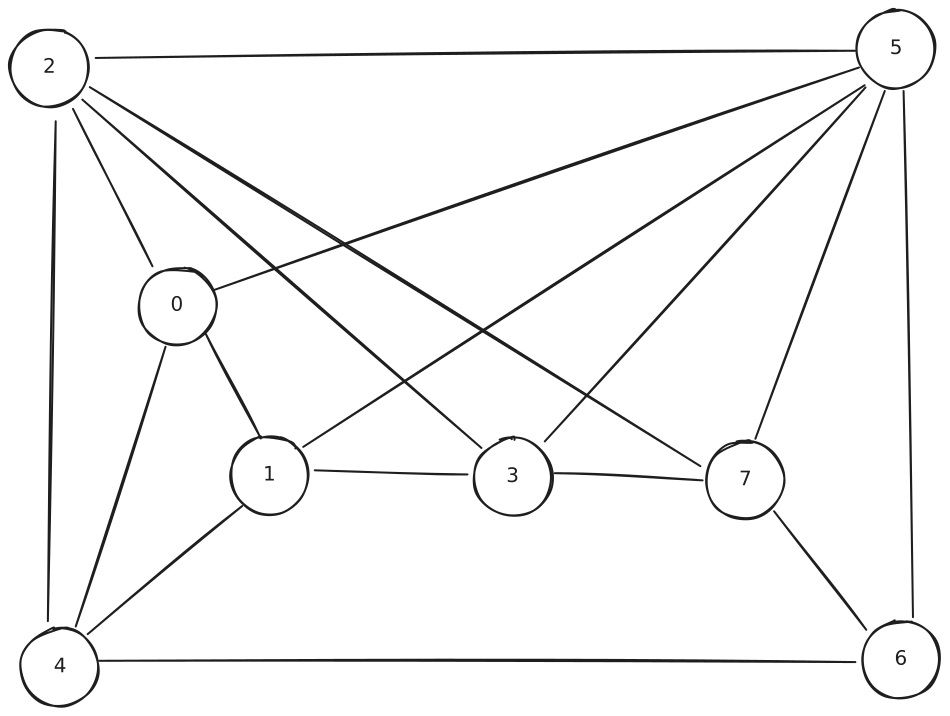
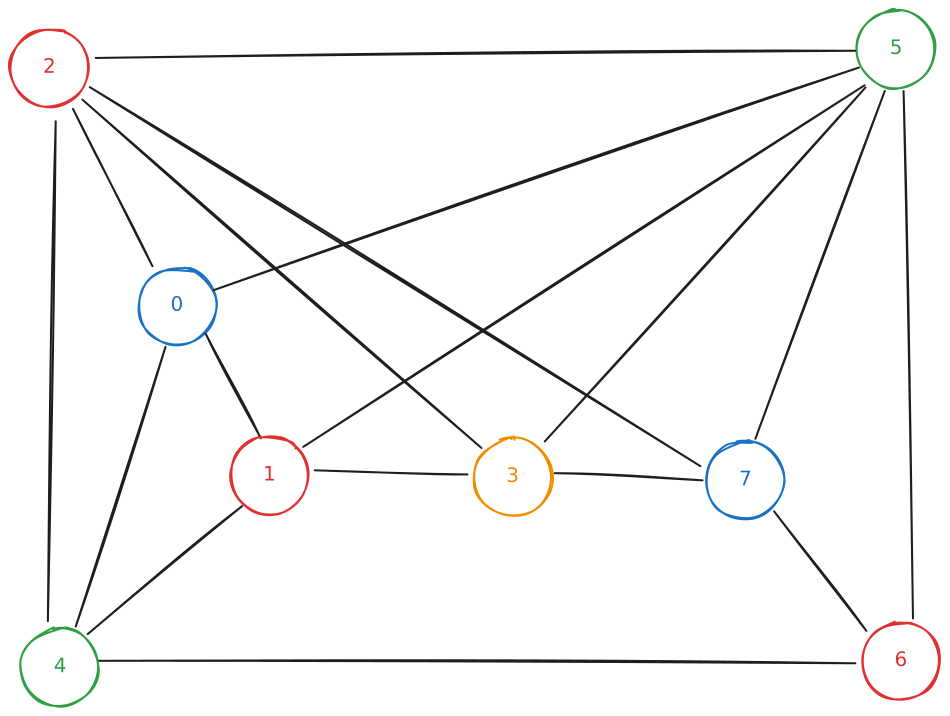
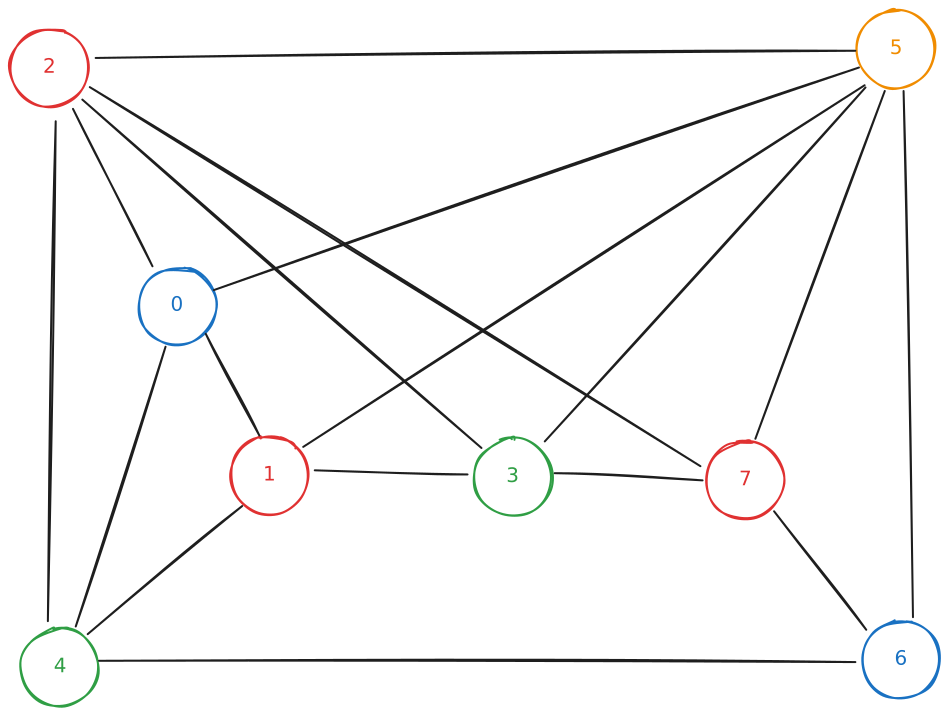
The trivial solution is to pick a unique color for each vertex. The fewest colors we can use to color the graph (chromatic number) is 4. Here are two ways to color the graph using 4 colors.
Sample input
0 4
2 4
2 5
0 2
4 6
2 3
1 5
5 7
1 4
5 6
2 7
3 7
3 5
1 3
6 7
0 1
0 5
Inputs
| small_ultra_sparse.txt | 3.38KB | |
| small_sparse.txt | 9.00KB | |
| small_dense.txt | 17KB | |
| medium_ultra_sparse.txt | 395KB | |
| medium_sparse.txt | 1.17MB | |
| medium_dense.txt | 2.33MB | |
| large_ultra_sparse.txt | 48MB | |
| large_sparse.txt | 146MB | |
| large_dense.txt | 293MB |
[Log in] to test and submit a solution.